Sunday, July 23, 2023

Ozma of Oz by the Toronto Civic Light Opera Company

 The Civic Light Opera is back with one more Oz story, the third Oz book, Ozma of Oz, which they have decided will be their final entry. They've released (and I've reviewed) The Wonderful Wizard of Oz and The Marvelous Land of Oz, so to avoid being an Oz company for a long time, they're concluding with Ozma and going on to other stories.

The CLO is sticking with MP3CD to distribute their audiobooks. These are CDs that have MP3 files on them as a data track, allowing for a lot more audio than you'd get from a standard audio track on a CD. Modern CD players can play these, and you can also play them back in a computer with a disc drive or use it to copy the files to a portable device. Or you can do what I did and put it in a home theater DVD or Blu-Ray player, pull up the folder of MP3 files and just start playing.

Ozma of Oz goes back to the Outside World (our world), where we find Dorothy and Uncle Henry on a trip to Australia on a stormy night. While looking around for Uncle Henry, Dorothy goes on deck, only to be washed overboard, finding refuge in a chicken coop. She awakens outside of the Land of Ev with Billina, a talking chicken. On their way to find out the best course of action, they meet the mechanical man Tik-Tok, and Princess Langwidere who has thirty interchangeable heads in her boudoir. But soon Dorothy and her companions fall in with the visiting princess Ozma of Oz, who's heading to the nearby Nome Kingdom to rescue the Royal Family of Ev from the Nome King.

If you're familiar with my previous reviews, you'll know what to expect. While the text is unabridged, the introductions and chapter titles are not read. Joe Cascone narrates with a full cast performing the dialogue, the cast returning from their roles in the previous two audiobooks.

To make it further stand out, classical music and sound effects are added. This is where I have to mention one thing. During the story, both Langwidere and the Nome King use bells to call for their subordinates or to be alerted. The same sound effect is used for all times, which is fine, it's just that this sound effect is very familiar if you've ever seen a commercial for Taco Bell.

Audio quality is good. I was playing it back with the audio going through the soundbar and found it sounded best if I used the music setting.

Overall, it's a great presentation of the story.

Again, we get a matching presentation in a jewel case, decorated with artwork by John R. Neill, photos of the cast, an introductory note from Joe, a cast list and a list of music used in the production. If you miss physical media, these are worth looking over.

To get a copy, Joe has it for sale on his website, along with the first two Oz books as well as music CDs and notices of his upcoming audio versions of A Christmas Carol and Animal Farm.


Sunday, July 16, 2023

The Royal Podcast of Oz: Wicked Movie Hype!

Jay, returning guest Angelo Thomas and new guest Tyler Varney discuss the upcoming two-part film adaptation of the musical Wicked. They discuss the director, the cast, the decision to make two movies, the current state of Hollywood, the sneak peeks, the leaks, and where could we expect to see some original Broadway cast cameos?

Listen to the episode on Spotify.

Sunday, June 25, 2023

The Royal Podcast of Oz: The Movies of Oz - The Witches of Oz

 Jay and Sam are joined by Angelo Thomas in breaking down the miniseries The Witches of Oz and its movie counterpart Dorothy and the Witches of Oz.

Angelo reveals behind the scenes details and gives us the scoop on the unrealized sequel.


Saturday, May 20, 2023

The Royal Podcast of Oz: The Movies of Oz - The Wonderful Wizard of Ha's.

Jay and Sam waltz up and down the produce aisle as they look at Veggie Tales' The Whimsical Wizard of Ha's as the parable of The Prodigal Son is mixed with a Wizard of Oz parody.

No, the Wizard of Oz isn't a political allegory

 This comes up over and over online. Even in comments on this blog, I've seen it come up.

The Wizard of Oz is a parable or allegory on Populism! Everything matches up! The Silver Shoes are the Silver Standard, the yellow brick road is the Gold Standard, the wicked witches are the east and west coast bankers, Dorothy is the common man, the Scarecrow is the farmers, the Tin Woodman is the industrial workers, and the Lion is William Jennings Bryan, who didn't win the presidency, while the Wizard is the president.

It's an interesting way to read it.

The political allegory of Oz took off after Gore Vidal referred to an article by Henry Littlefield in which he describes a view using the story of The Wonderful Wizard of Oz to explain the 1896 presidential election. He first came up with this to explain it to his class while teaching about the economic theory of Populism.

After it hit mainstream, it's been repeated over and over and gotten changed up (the Wicked Witch of the West's hostility is described by Littlefield as "she is Baum's version of sentient and malign nature," not being a banker).

Does this work? To a point, yes.

The problem is when the claim is made that this is what L. Frank Baum intended.

Why do we see fantasy as allegory?

Fantasy opened the door wide for allegory. With fantasy, writers could use utterly impossible scenarios to describe concepts they wanted to communicate.

The most famous allegory is John Bunyan's The Pilgrim's Progress. It uses a journey with fantastic monsters and strange locations to describe the life of a believer in Christianity, staying true to their teachings, sometimes getting sidetracked, but eventually making it to Heaven. It's the go-to example of an allegory because there's no mystery as to what the characters and places represent: the main protagonist is named Christian, he is told of the journey he needs to take by a man called Evangelist, he has companions named Pliable who turns back at the first danger he encounters, as well as his successful friends Faithful and Hopeful. While it's clear what it means, it's also a fantasy as Christian faces a monster he must battle and is later captured by a giant.

In 1950, another fantasy was published with clear Christian themes: C.S. Lewis' The Lion, the Witch and the Wardrobe. Likely, most of the people reading have read it themselves or have enjoyed some adaptation of it. Like the Oz stories, children go to a land where magic clearly exists, which Lewis clearly says is another world. During the events, one of the children, Edmund, is convinced to betray his siblings by telling the villainous White Witch about them and going to her after all of them enter the land of Narnia, putting them all in danger as the rest go to see the heroic Aslan who is trying to free Narnia from the Witch's reign. Aslan allows himself to be killed in place of Edmund, but as he is innocent, he resurrects and is able to finally defeat the Witch during battle.

 Lewis would claim that the story and its sequels—forming the series The Chronicles of Narnia—were not allegories. In the third book, Aslan reveals to Edmund and his sister Lucy that he also exists in their world, but has another name. Aslan is no longer is a fantasy stand-in for Jesus, he's supposed to be Jesus in a fantasy world. (YouTube literary reviewer Dominic Noble has come up with the phrase "Aslan was Jesus' fursona.") The stories did contain strong Christian themes, but they weren't properly allegorical.

One of Lewis' colleagues and friends, J.R.R. Tolkien, also wrote fantasy stories in The Hobbit and The Lord of the Rings, which some began to interpret as an allegory of World War II. It's not hard to see as the story sees an entire world at war. Even places that aren't going to war are still affected by it. However, Tolkien refuted these claims saying his story was "neither allegorical nor topical." He would also say a key line that I think of when addressing allegory: "I think people confuse allegory with applicability."

So, back to Oz.

In allegory, when something is made to represent a concept, it needs to represent that concept consistently. For me, a big point of the story of The Wizard of Oz that just doesn't get addressed is if the Wizard is a stand-in for a president, he abdicates his throne to help Dorothy. Where does this tie into a president leaving office? Furthermore, the Wizard names the Scarecrow his successor, but given the line of succession, the Vice President steps in as president, an incoming person wouldn't be made the president instead. Littlefield doesn't address this, and I haven't heard much about other interpretations addressing it either. A change in a country's leadership is a huge thing to discuss, but it's not addressed.

This doesn't mean there's no merit to using Oz to talk about Populism or even teaching the 1896 election. But the problem is attributing this—to take the term from Tolkien—applicability to Baum as his intent.

Could Baum have intended an allegory?

Baum was not a Populist. He did not support William Jennings Bryan as might be assumed from the interpretation Littlefield proposed. Baum also wrote many other works both under his name and under pseudonyms and anonymously, some even set in his modern world and in places that actually exist. The most political Baum got was in Aunt Jane's Nieces in the Red Cross, which was actually revised given the United States' position in World War I changing between the first and second versions.

But when it comes to claiming Baum had allegorical intention in his work, generally only The Wonderful Wizard of Oz is brought up. It was Baum's first novel, his previous fiction books being short story collections and poetry. Given his later work, he did much better in stories like Queen Zixi of Ix and Sky Island at creating strong, linear stories, while Wonderful Wizard is a series of story time episodes that link together into a clear narrative. Baum could produce some great work, but some of his other books fall quite short, and it'd be strange that early on in his literary career, he'd masterfully weave in a neat allegory that no one noticed for over fifty years.

I have seen claims that the Wooden Gargoyles in Dorothy and the Wizard in Oz represent native Americans and the Awgwas in The Life and Adventures of Santa Claus represent Jewish people, but the reasoning behind these was either not presented or very sketchy. Still, it's worth remembering that Baum was a white man from a well-off family in the late 19th century and while eventually becoming poor while caring for his own children (he wasn't good with money) and embracing his mother in law's views on feminism, he fell short in embracing other progressive ideals, his editorials on the Sioux being a dark stain on his legacy.

People have also read the Army of Revolt in The Marvelous Land of Oz as a comment on the suffragette movement of the time, but Baum was a supporter of the suffragist movement, and in that book, Oz is under a woman's rule at the end and going forward, and the Army of Revolt meets another all-female army in Glinda's far more skilled and disciplined forces.

Baum also makes Oz into a communist society without money by his sixth Oz book, The Emerald City of Oz in which everyone is able to get what they need thanks to a benevolent ruler operating a government that doesn't forget that it's supposed to care for the people. People provide for themselves and their fellow citizens and when they need more, they simply are given more by their local leaders. This isn't a reading of the subtext, it's actually spelled out in passages from Emerald City and The Road to Oz. Yet, we didn't see him advocating for a similar system in the United States.

Littlefield later clarified that he didn't mean to claim that his Populism interpretation was Baum's intent. However, his original article could easily confuse readers into suggesting it was intentional:

Yet once discovered, the author's allegorical intent seems clear, and it gives depth and lasting interest even to children who only sense something else beneath the surface of the story. Consider the fun in picturing turn-of-the-century America, a difficult era at best, using these ready-made symbols provided by Baum. The relationship and analogies outlined above are admittedly theoretical, but they are far too consistent to be coincidental, and they furnish a teaching mechanism which is guaranteed to reach any level of student. 

(Emphasis mine.)

It's worth noting that Oz has been interpreted by a number of other philosophies and has even been seen as a reflection on contemporary relations between China and Japan. I even saw someone claim it was supposed to be a Christian story with Dorothy's friends representing God, Jesus and the Holy Spirit. (No other explanation was given, simply that three characters must represent the Holy Trinity.)

It's worth pointing out that stories mean a lot to many different people. Once they leave the creator and go out to the public, they're there for audiences to enjoy and part of that is finding meaning in them. It's impossible for everyone to exactly match up with the author's intent while creating the work, and Baum specifically wrote that he intended The Wonderful Wizard of Oz "solely to please the children of today" in the introduction to the book.

Why shouldn't we say it's Baum's intent?

While everyone is welcome to read Baum's works and come away with their own interpretation, claiming their take on it is Baum's intent is to claim you know something you have no proof of. You don't even know what a close friend or family member might be thinking at this moment. Can you really claim you can tell what someone was thinking over 100 years ago?

We do have context for Baum's life in all of his works together and the biographical information researchers have turned up. Yet it doesn't really support the Populist interpretation as mentioned above.

Claiming without evidence colors views of a person unrealistically. These unfounded ideas can get sensationalized and spread far more quickly than their rebuttal. This goes on to this day where if someone makes a strong accusation on Twitter to someone, the accusation can get retweeted and shared, but a fair rebuttal and apology likely won't make the same waves.

Thus, when you're presenting information, it's important to make the distinction between something backed up by facts and evidence and what might be a fair assumption, and what is entirely conjecture. This is why in journalism, someone charged with a completely likely crime they may have committed is only said to have done it "allegedly."

It's why many fans bristle at simply labeling Baum "racist" even though we clearly have evidence to back it up from his articles on the Sioux to his use of stereotypes in his literature to even a few uses of the "n-word." While we can't deny Baum had racist views or views inspired by racism, coloring him as simply a racist ignores what else he was or can stop you from thinking about his work outside of that scope. It's important to understand all of who Baum was when reading his works critically.

I need to link to Eric Gjovaag's take on addressing this on his website's FAQ. An earlier version of his answer was my first exposure to the idea and I did touch on some of the same points he did.

Wednesday, January 04, 2023

Why Warner Brothers' New Wizard of Oz and The Wicked Movies Shouldn't Connect

 Screenrant posted a piece by Kayla Laguerre-Lewis arguing that the two-part film adaptation of Wicked and Warner Brothers' Kenya Barris Wizard of Oz should connect. I saw a link to the piece on Facebook, and of course, fans were disagreeing with the point or even the headline.

It's entirely possible for studios to collaborate. Right now, we have Sony's Columbia Pictures and Disney's Marvel Studios giving us Tom Holland's Spider-Man movies set in the Marvel Cinematic Universe.

However, with Oz, it's completely possible for studios to make projects independently as long as they don't cross trademarks and copyrights and licenses. Warner Brothers owns the MGM film The Wizard of Oz through their absorption of Turner Entertainment, who had bought MGM's catalog in the 1980s.

Universal was always going to be the one to make the Wicked film adaptation happen as they'd backed the musical. And the primary source material of both, L. Frank Baum's book The Wonderful Wizard of Oz, and the sequels he wrote to it are public domain, allowing for them to be freely exploited by anyone who can. Wicked is, of course, based on Gregory Maguire's novel Wicked: The Life and Times of the Wicked Witch of the West, a derivative work of the Baum story.

Oz has been adapted many times over the years, allowing for different artists to bring their own spins to the material, from the original musical adaptation that hit Broadway in 1903 to the 1925 silent film, to 2007's Tin Man and 2017's Emerald City. Some fare better than others with fans, others have fans split.

Gregory Maguire's Wicked was a difficult piece to adapt into a Broadway musical, with a huge overhaul of the story dropping a lot of elements. Yet the musical took off and has a life of its own, still aware of its roots in Maguire's text, Baum's creation and the MGM landmark adaptation.

The novel questions the nature of Good and Evil and where our perceptions lie, using a famous character whose name was more a description as a protagonist. It's also worth noting that the word "wicked" doesn't necessarily mean evil, but twisted. It has the same root word as "wreath," "wicker" and "wraith." It's something that has been changed from its original purpose.

The musical found a different way to handle it. Early in the musical, Glinda asks, "Are people born wicked, or do they have wickedness thrust upon them?" If we take the "twisted" definition, Glinda in the musical is also "wicked," not that she's evil, but that she found herself taking a different path than she anticipated. (In the novel, Glinda is far less of an active character after her school years.)

The thing is, Wicked is not the story of The Wonderful Wizard of Oz. Oz is the story of Dorothy Gale, a young girl thrust into a strange and unfamiliar world, looking for a way to get home, empowering other people to improve their lives. Wicked is adjacent to Dorothy's story, looking at the character held to be the villain of Dorothy's story in an alternate universe to the original Baum or MGM incarnations.

Oz fans are split on Wicked to this day. I wouldn't be surprised if there are fans of Maguire's novel who dislike the musical and vice versa. However, the property is in itself an example of what can be done with Oz when one is not constrained by another version.

Maguire's book decided to pull away from Baum's Oz (but brought over the green skinned witch from MGM) and create its own version with a more civilized ugly side. The musical adaptation used it as inspiration for a very different adaptation, not feeling constrained by its source material.

And the movie version of the musical is going to be in two films, likely involving new characters, plotlines and songs, again not constrained by its source.

So why should Kenya Barris make his new interpretation of The Wizard of Oz connect to another version? It's likely not going to be the MGM film again, and it won't be exactly like Baum's book (though I hope we'll see the basis).

I don't want to see an artist make their version of Oz be forced to fit some inter-corporate synergy. I want them to offer their own version, unique and able to be what it wants. Not the other side of Wicked. And as The Chronicles of Oz proved, you can nod your cap to other versions lovingly while not constraining yourself to them.

Now what do I have to do to get an Oz movie featuring Ozma, Scraps and Polychrome?

Wednesday, December 28, 2022

Mr. Hoffmann and Mr. Baum

 When people discuss the classic young female heroines of fantasy literature, they usually get down to three: Alice from Lewis Carroll's Alice stories, Dorothy Gale from the Oz books, and Wendy Darling from J.M. Barrie's Peter Pan. There's others who could make the cut (Betsy, Trot and Ozma could back up Dorothy), and some get ignored, whether for near obscurity (Anthea and Jane from E. Nesbitt's Five Children and It), and others are left out due to copyright concerns (Jane and Barbara Banks from the Mary Poppins stories, Susan and Lucy Pevensie from The Chronicles of Narnia), but there's one before Alice who routinely gets ignored: Marie Stahlbaum.

Marie is from E.T.A. Hoffmann's The Nutcracker and the Mouse King, originally published in 1816. Maybe Marie doesn't usually get lumped in because the story was originally written in German and all the others are written in English. Or perhaps as the story opens at Christmas, it gets considered a Christmas story while the others aren't necessarily tied to a holiday. And there's also the fact that the public at large is less familiar with the original text than they are a highly streamlined version of the story that gets adapted into countless ballet variations every year.

Wait, the original text gets ignored for a popular streamlined adaptation? Oz fans, we know the feeling.

Interestingly, there's several parallels with Oz. Alexander Volkov rewrote The Wonderful Wizard of Oz in Russian as The Wizard of the Emerald City, naming characters Baum hadn't and changing names. Similarly, Alexandre Dumas (yes, the Three Musketeers guy) rewrote Hoffmann's story in French as The History of a Nutcracker. The Nutcracker prince got the name Nathaniel (yes, Hoffmann didn't name the title characters, Baum also didn't name the Wizard until Dorothy and the Wizard in Oz), and Marie's family name was changed to Silberhaus. Dumas' version helped launch the story into wider consciousness and is the version the ballet was based on.

In the original production of the ballet, Marie's name was changed to Clara for the first time, carrying over into later adaptations of the story. I suspect it was to prevent any connection drawn to the daughter of librettist and choreographer Marius Petipa, the famous ballerina Marie Petipa. In Hoffmann's original story, Clara is the name of a doll Marie gets for Christmas. Some claim the name gets swapped between them, but I've only seen one adaptation of the Nutcracker have the doll named Marie when our heroine is named Clara. (Disney's recent takes on the story find ways to use both names.)

Regardless of the name, Marie (as I'll call her) is explicitly said in the original text to be only seven years old when the main action of the story takes place. This makes her the same age as Alice, and around the same age a lot of readers assume Dorothy is on her first adventure in Oz.

It is well known that Alice was named for Alice Liddell, a girl that Lewis Carroll was friendly with. It's also believed that Baum named Dorothy for his late niece, Dorothy Gage. Just like them, Marie and her brother Fritz were named for Marie and Fritz Hitzig, children of a dear friend of Hoffmann's, Julius Eduard Hitzig. It's believed that he expressed himself through the mysterious Godfather Drosselmeyer, who presents the the Stahlbaum children with an elaborate clockwork castle. In real life, Hoffmann created a cardboard castle for the Hitzigs while spending the holiday with them. Then the next year, he delighted them with his new story inspired by the festivities.

Similar to Baum, who tried to improve on The Wonderful Wizard of Oz (although it became his claim to fame), Hoffmann took to heart much of the criticism of The Nutcracker and the Mouse King, later producing The Strange Child. Both stories appear in his collections The Serapion Brothers, in which his stories are presented with a framing device of writers who share their stories with each other and critique them. (English translations of The Serapion Brothers, save print on demand affairs, are long out of print with publishers favoring new translations of selected Hoffmann stories. Luckily for us, we have Project Gutenberg to give us Alexander Ewing's serviceable if outdated translation.) Hoffmann has the other writers call out some of the story's weaknesses.

Lothair, the fictional writer who The Nutcracker and the Mouse King gets attributed to, declares: "I think it is a great mistake to suppose that clever, imaginative children—and it is only they who are in question here—should content themselves with the empty nonsense which is so often set before them under the name of Children's Tales. They want something much better; and it is surprising how much they see and appreciate which escapes a good, honest, well-informed papa."

One could imagine Baum saying the same thing. In his introduction to The Wonderful Wizard of Oz (a simple piece that is often overlooked when evaluating his work), he writes "every healthy youngster has a wholesome and instinctive love for stories fantastic, marvelous and manifestly unreal." Two years later in the piece "What Children Want," he wrote "Positively the child cannot be satisfied with inanities in its story books. It craves marvels – fairy tales, adventures, surprising and unreal occurrences; gorgeousness, color and kaleidoscopic succession of inspiring incident."

I would hesitate to claim that Baum read Hoffmann. To be sure, it wouldn't be impossible as English translations of Hoffmann were available. However, Hoffmann is one of the earliest writers of what became modern science fiction and gothic fantasy. In many of his fantasies, such as The Golden Pot, we find a person living a normal life when they happen to witness something wonderful. A serpent under a tree becomes a lovely woman, a tiny flea helps a young man see beyond the deceptions thrown in his way, a miner sees a fantastic underground kingdom, a little girl sees a damaged nutcracker's eyes sparkle, or a bedridden invalid interprets the goings on outside his window. In a similar vein, Baum made a common but terrifying Kansas cyclone become the gateway to an incredible adventure.

Hoffmann is known to have inspired writers Baum would almost certainly have read, such as Edgar Allen Poe and also Charles Dickens, who Baum claimed was a favorite. (In fact, some wonder if Dickens' nickname Boz was actually the inspiration for Baum's most famous creation.) So even if Baum didn't know Hoffmann directly, some inspiration passed along.

There are other similarities between Baum and Hoffmann. Given their lifespans, they both settled into the life of an author late in their lives, with Baum picking up on children's writing in the last 22 years of his life. Hoffmann began publishing his stories in his last decade of life. Both were fairly progressive in their views and enjoyed music and the stage, Baum writing many pieces for the stage in his life, and Hoffmann created the opera Undine and composing music on his own. And yet as varied and fascinating careers as both men had, both are remembered chiefly for a fantasy work for children they produced: The Nutcracker and the Mouse King and The Wonderful Wizard of Oz. And both works inspired far more popular dramatic adaptations famous for their music: The Nutcracker ballet scored by Tchaikovsky and MGM's classic film The Wizard of Oz.

In fact if we may go further, both of these famous adaptations often under serve their heroines. Judy Garland's Dorothy is less headstrong than her literary counterpart, relying on her friends to rescue her from the Wicked Witch of the West when she's captured and her defeat of the Witch being a happy accident. Baum's Dorothy also accidentally kills the Witch, but in an act of defiance. Don't get me wrong, Judy is still a powerhouse of a performer in the film, but her character could have stood up to the Witch a little more.

In The Nutcracker ballet, Marie (or Clara, depending on the production) is largely passive until she happens to throw her shoe at the Mouse King. In Hoffmann, Marie only wishes throwing her shoe was the end of the Mouse King. Instead of immediately being whisked to a fairyland, she awakens in bed with a nasty cut in her arm and her parents chiding her for being careless. While she's recovering the Mouse King comes to her at night and demands her Christmas candy and then her sugar dolls in return for not destroying the Nutcracker. (And note, with German customs, her injury means she had to sit out most of her family's Christmas celebrations, so those are all she had left of her holiday.) She finally realizes the Nutcracker needs a new sword and manages to procure one from her brother, allowing the Nutcracker to finally defeat the Mouse King. The Nutcracker hails her as the reason for his victory.

Baum and Hoffmann, despite coming from different cultures and different times, seem to have nearly been on the same wavelength when it came to their sensibilities, writing of the mundane turning into the bizarre and fantastic, and even describing wondrous fantasy worlds.

So, if one is going to have Dorothy meet up with Alice and Wendy, perhaps they should also make room for a little German girl.

Thursday, December 15, 2022

The Marvelous Land of Oz by the Toronto Civic Light Opera Company


 The Civic Light Opera Company has released their second unabridged audiobook, following from their first, reading L. Frank Baum's The Marvelous Land of Oz.

It's currently only on MP3CD, allowing for a much longer runtime than a traditional audio CD. The production runs for nearly four hours. Some more modern CD players can play MP3CDs (if you're not sure, check your manual or packaging, if you still have them), or you can play it on a home entertainment disc player, or play it on a computer with a disc drive or use the computer to copy the files to a device.

For my listen through, I used my home entertainment setup, popping it in my 4K disc player and playing it through my soundbar. (I did have to select the "music" profile on the soundbar's remote to make it sound fine.) Wound up playing it from beginning to end.

If you're not familiar with the second Oz book, it takes place largely inside the realm of Oz, no outside characters visit, Baum breaking away from the formula he established in The Wonderful Wizard of Oz. Our protagonist is a boy named Tip, who lives in the northern Gillikin Country of Oz with Mombi, an old woman who secretly practices magic. When Mombi brings Tip's creation Jack Pumpkinhead to life, she announces her plan to transform Tip into a statue, forcing him to take Jack and flee to the Emerald City. However, the Emerald City is being invaded by an all-female army, seeking to overthrow the Scarecrow. Tip, Jack, the Scarecrow, the Tin Woodman and more new characters embark on an adventure that leads them to discover startling secrets from Oz's history.

I want to commend Joe Cascone and company for continuity. It's quality narration by Joe Cascone, with a cast of performers hopping in to give their own interpretations of the characters. Cast members from the Wizard audiobook reprise their roles when available, and others pop up in new roles, for example, David Haines, the Cowardly Lion of the company of stage and audio, takes on Jack Pumpkinhead.

In addition, sound effects and classical music are used to enhance the experience. There were times that the sound effects sounded so realistic I had to check on my cat to make sure she wasn't causing some sort of mischief.

I was pleased and entertained by the new production. Some of the casting made the characters sound older than I would personally want them to be, but it was all right. I was particularly pleasantly surprised that Mickey Brown as Mombi didn't go for a cackling witch voice as many depictions often do. A lot of fans simply interpret Mombi as another witch like the Wicked Witches of the East and West, but I feel the character is more complicated than that, and making her sound like someone who could pass for an ordinary Gillikin woman plays into that.

Again, if you wanted a reading of chapter titles, the dedication and introduction, they aren't here, allowing you to immediately get immersed in the story. The way I was playing it, the track names popped up on my TV's screen.

So yes, I'd recommend this production.

Again, the CD is in a jewel case complete with a four-page booklet with some explanatory text about the story and images to illustrate the story. A cast list is in the tray card and photos of the cast are in the booklet.

The really cool announcement is that while you can buy a copy from an eBay listing, you can also buy it direct from Joe at his new website, which also offers the first one, copies of the Songs in the Key of Oz CD, the cast recording for his Wonderful Wizard of Oz musical and CD of him singing show tunes. Also teased is the upcoming audio book of Ozma of Oz and one for A Christmas Carol.

Saturday, December 10, 2022

The Wicked Movies Have Begun Filming

Well, the title says it all. Film has begun rolling (metaphorically since most movies are shot on digital) on director John M. Chu's two-part film adaptation of the musical Wicked: The Untold Story of the Witches of Oz.

Along with the news, more casting of principal roles have been announced. I say this because with casting announcements, there's an inaccurate perception that the roles are cast as they're announced. They need time to make sure songs are arranged to bring out the best performances and costumes are ready to go. Rather, they get cast well ahead of time. Announcing them is part of the publicity for the film.


JEFF GOLDBLUM | DICE
Jeff Goldblum has been confirmed as playing the Wizard in the movies. He should need no introduction, but if you're not familiar, he made his big break in David Cronenberg's remake of The Fly in 1986, then went on to feature in 1993's Jurassic Park and 1996's Independence Day. More recently, he's played the Grandmaster in the Marvel Cinematic Universe, appearing in 2017's Thor: Ragnarok. He also leads Disney+'s The World According to Jeff Goldblum and is commonly seen in commercials for Apartments.com.


Michelle Yeoh (楊紫瓊) - MyDramaList
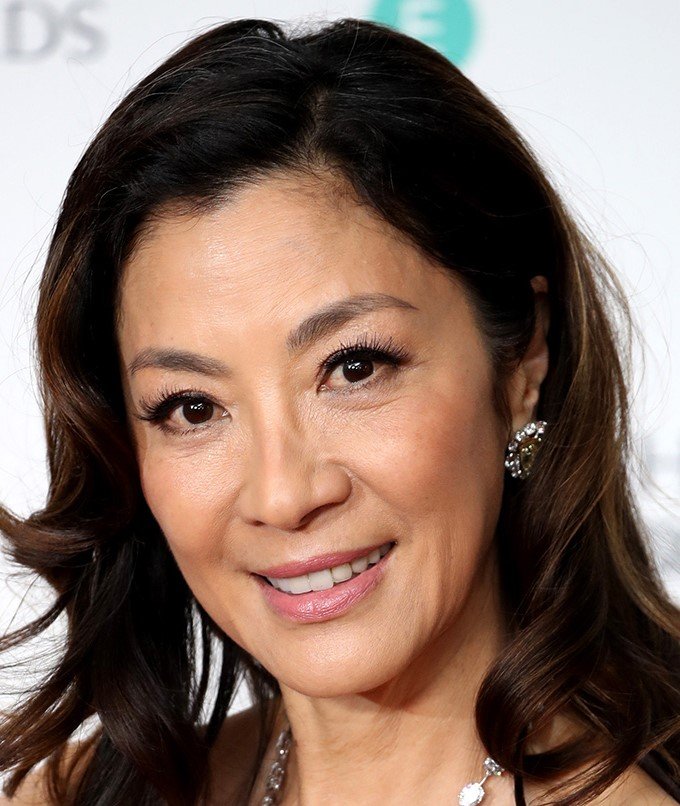
In addition, Michelle Yeoh has been cast as Madame Morrible, the headmistress of Shiz University. The casting is unexpected but a welcome surprise. The Malaysian actress has featured in several roles in film and television over the years, more recently joining the Star Trek franchise in the first season of Star Trek: Discovery, playing two roles in the Marvel Cinematic Universe in Guardians of the Galaxy Vol. 2 and Shang-Chi and the Legend of the Ten Rings, and starring in this year's sci-fi hit Everything Everywhere All At Once.


Wicked' Movie: Ethan Slater Joins Cast Opposite Ariana Grande - Variety
Ethan Slater has been cast as Boq, one of the students at Shiz University who crushes on Galinda but ends up involved with Nessarose, Elphaba's sister. The role is highly changed from the Gregory Maguire novel in which he is the Munchkin farmer from the original Baum book, he just happened to have brushed shoulders with Glinda and the "wicked" witches back in the day. Slater received a Drama Desk award for his lead role in Spongebob Squarepants: The Broadway Musical, a role he later reprised for a filmed television version.

Marissa Bode - IMDb
After these featured castings, a number of smaller roles were announced: wheelchair using actress Marissa Bode is making her feature film debut as Nessarose. Saturday Night Live cast member Bowen Yang and actress Bronwyn James are playing Pfanee and ShenShen, two Shiz classmates who are depicted as good friends with Galinda. Aaron Teoh will be playing Avaric, Fiyero's footman and driver. Colin Michael Carmichael will be playing Dr. Nikidik, the teacher who replaces Dr. Dillamond.

Keala Settle Talks 'Hiding' From the Spotlight Before 'The Greatest  Showman' Success; Plus, Fifth Harmony's Hiatus | Billboard – Billboard
The most surprising casting is Keala Settle as Miss Coddle. The actress and singer featured as a bearded lady in 2017's The Greatest Showman, impressing audiences with her singing voice. The character is seemingly original to the film adaptation. Given her incredible pipes, it's suspected she'll be singing one of the new songs Stephen Schwartz has been penning for the film.

Still to be announced is who's playing Dr. Dillamond. Given that the character is a goat, it is entirely possible that the role will be played by a stand-in during principal photography and created with CG in post-production, to be voiced by a yet to be announced surprise star.

Other roles yet to be confirmed are Frex and Melena, Nessarose and Elphaba's parents. It's also hoped that original Broadway cast members of the musical—especially stars Idina Menzel and Kristin Chenowith—will be appearing in cameos.

While Wicked isn't every Oz fan's cup of tea, it's exciting to have a film project to look forward to, and I'm very interested to see John Chu's new incarnation of the story.